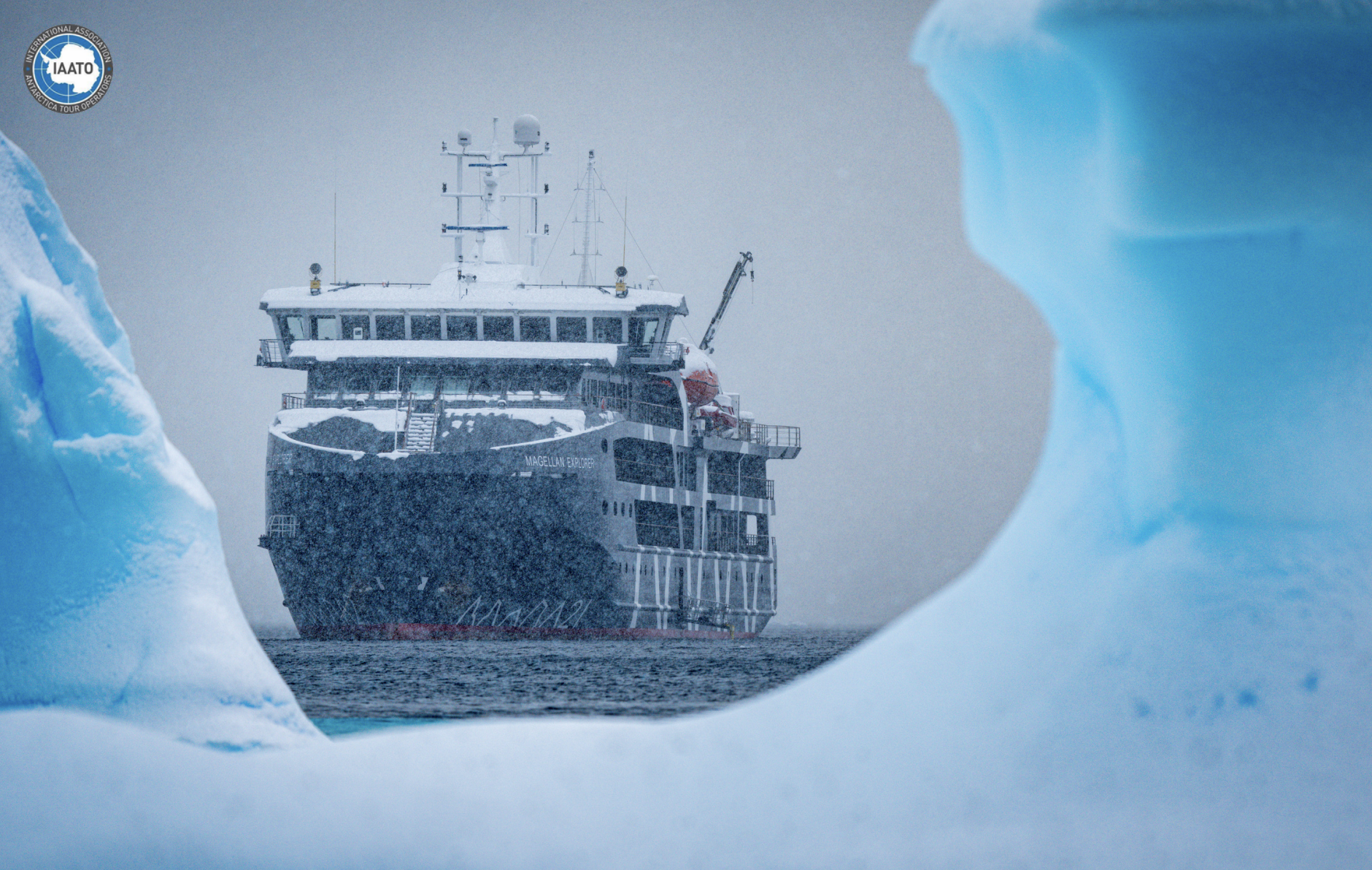
Antarctic tourism is a growing industry with an enormous carbon footprint.
Navigating the Tension
Antarctic travel stirs a fierce mix of wonder and unease — for those truly invested in climate action, science and sustainability, it’s not just adventure, it’s a responsibility. One of the most important educational strands of the expedition is the tension surrounding the journey itself. As Head of Environmental Sustainability, Aloni has spent considerable time reflecting on the question:
Should I even be going to Antarctica?
And, more broadly …
Should anyone?
The expedition provides an opportunity to meet climate scientists, sustainability leaders, educators and youth advocates all offering significant potential for learning, collaboration and influence. At the same time, travelling to Antarctica carries a substantial environmental footprint.
Rather than avoiding that contradiction, the intention is to make it visible and educationally useful.
This provides a real-world example of the complexity of sustainability leadership, where decisions are not always clearly “right” or “wrong” and where competing values need to be examined carefully.
Key themes include:
intention versus impact
individual carbon responsibility versus wider influence
the ethics of high-impact travel
the burden of proof for environmental leadership
how we measure meaningful educational return
what constitutes responsible exploration
This tension of this opportunity provides different entry points for students at different developmental stages.
Purposeful Leadership
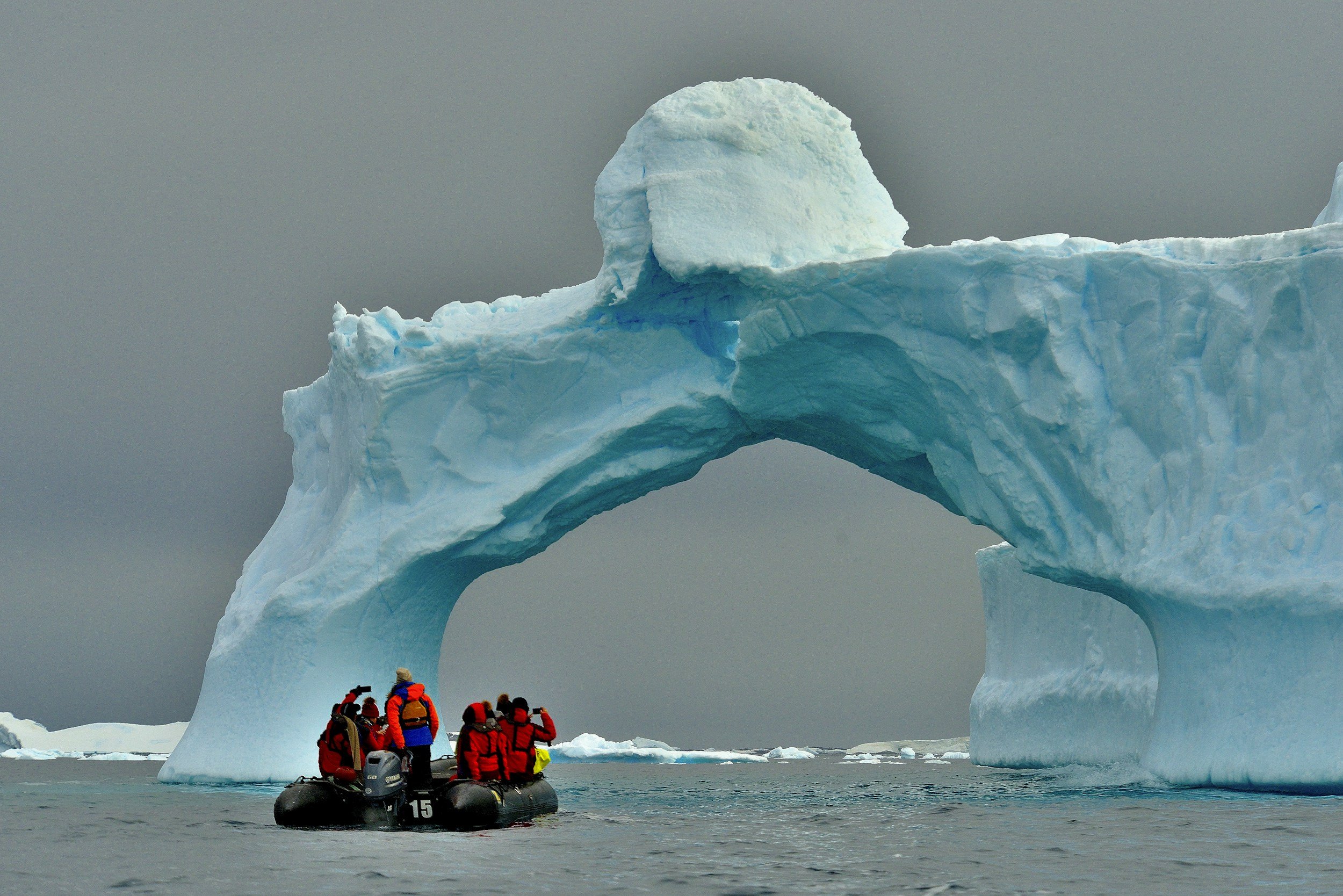
Traveling to one of the Earth’s most vulnerable ecosystems to advocate for its protection presents an undeniable contradiction - one where the high carbon cost of polar access directly intersects with the imperative for transformative climate leadership.
Grounded in contemporary polar research and environmental ethics, this platform candidly examines that tension, asking not merely whether such a journey is justified, but what level of educational, institutional, and systemic impact must be delivered to make it so.
From the initial invitation by Sir Robert Swan to navigating the complex trade-offs of polar tourism, this journey is framed by Aloni around a single guiding principle: that ethical legitimacy of high-impact travel relies entirely on the tangible learning, advocacy, and agency brought back to our school community and beyond.
Pre-Expedition Engagement
This will use a playful, age-appropriate approach, potentially linked to Halloween and possibly including Aloni appearing dressed as a penguin.
The tone should be:
intriguing
joyful
hopeful
imaginative
grounded in real science and stewardship
The key message is that caring for somewhere begins with becoming curious about it.
The expedition can become something Primary students follow rather than simply hear about afterwards.
Post-Expedition Learning
On return, Aloni can reconnect with Primary students through:
stories and photographs
observations from the expedition
wildlife and ecosystem learning
questions students asked before the trip
reflections on what surprised her
simple stewardship actions
links between Antarctica and Singapore
This allows students to experience the journey as a learning arc rather than a one-off assembly.
PRIMARY SCHOOL
Key framing
For Primary School, the emphasis will be on:
Curiosity, wonder, hope and stewardship.
The aim is not to begin with complex discussions around carbon accounting or ethical trade-offs.
Instead, Antarctica can first be introduced as a place of extraordinary natural wonder and global importance.
Possible questions include:
What is Antarctica like?
What lives there?
Why is it important?
Why should we care about a place so far away from Singapore?
What should Aloni look for while she is there?
What questions would we like her to bring back answers to?
The intention is to build emotional connection and curiosity before introducing more complex ideas.
MIDDLE SCHOOL
Key framing
For Middle School, the story can move from wonder and stewardship into:
Geopolitics, shared responsibility and international cooperation.
Antarctica provides an unusually powerful lens through which to explore questions about how humans govern shared places and systems.
Possible themes include:
who governs Antarctica
international cooperation
science diplomacy
competing national interests
climate responsibility
resource use
collective decision-making
the future of the Antarctic Treaty system
Post-Expedition Learning
MUN connection
Following her return from Antarctica, Aloni is scheduled to deliver a keynote address on Saturday 16 January to approximately 350 MUN students from across Singapore.
This provides a strong opportunity to connect her first-hand experience with geopolitical discussion.
The session can explore Antarctica not simply as an environmental issue, but as a case study in:
diplomacy
international governance
cooperation
conflict avoidance
scientific collaboration
shared global responsibility
Because Aloni will have recently returned from the continent, students can engage with these questions through current observations and lived experience rather than as a purely theoretical case study.
HIGH SCHOOL
Key framing
For High School, the expedition becomes a much more explicit provocation around:
Ethics, Systems Thinking, Leadership and the tension between values and action.
The central question is:
Should I even be going to Antarctica?
This will form part of Aloni’s contribution to the Grade 11 IB Systems Transformation course within the Change-makers unit.
The educational value lies partly in the fact that this is not a hypothetical dilemma.
It is a live decision that Aloni herself has had to navigate over several months.
Pre-Expedition Engagement
Calculating Impact
How do we measure whether the educational and systemic value created by the expedition justifies its environmental footprint?
Ethical Governance
Who has the legitimacy to decide when high-carbon travel is justified? What frameworks should guide such decisions?
The Burden of Proof
If someone undertakes environmentally costly travel in the name of sustainability, education or leadership, what tangible outcomes should they be expected to deliver afterwards?
Integrity versus Influence
Is declining an opportunity in order to maintain personal carbon integrity necessarily more values-aligned than stepping into a position where greater influence may be possible?
Intention versus Impact
Can good intentions compensate for environmental impact? If not, how should they be weighed?
Leadership and Accountability
What responsibilities come with accepting a high-profile opportunity in the name of sustainability?