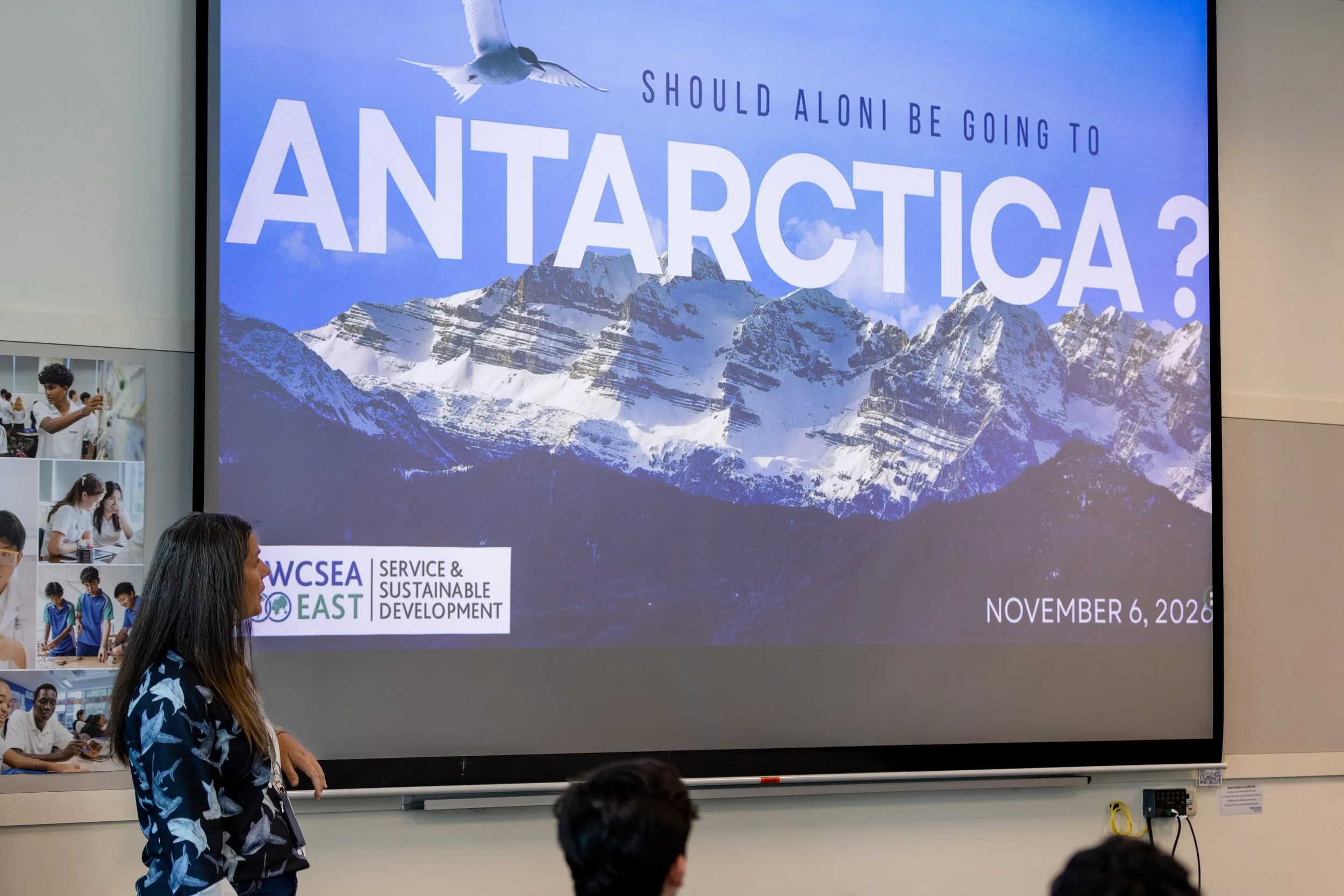
“Should I even be going to Antarctica?”
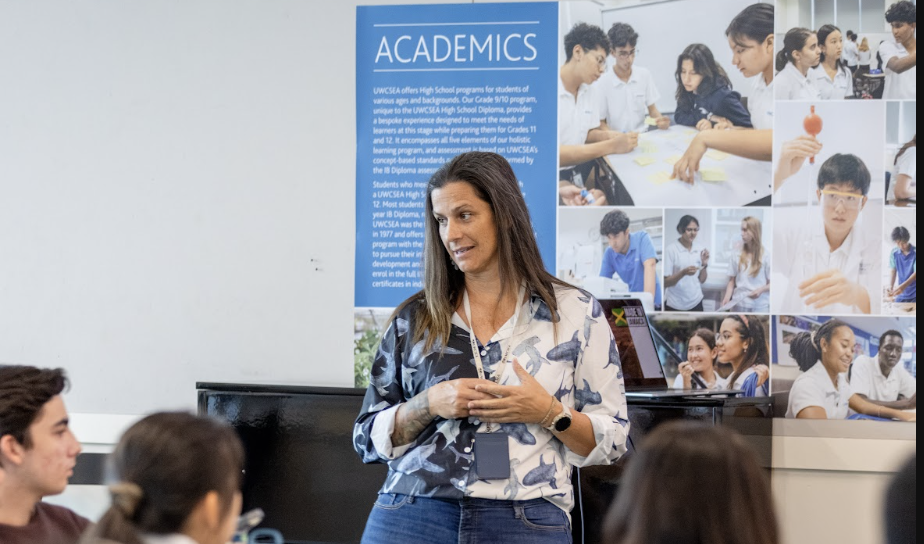
That was the live, multi-layered provocation I brought into the conference room recently when I was invited to join our Grade 11 IB Systems Transformation students as a guest speaker. Systems Transformation is an innovative, interdisciplinary IB pilot program designed to move students beyond traditional classroom silos. Rather than looking at global challenges in isolation, students learn to map complex webs of cause and effect, uncover hidden power dynamics, and identify high-leverage intervention points. Throughout their course, the students learn from guest Changemakers, dedicated to understanding how individuals catalyse meaningful, lasting shifts in their communities and beyond.
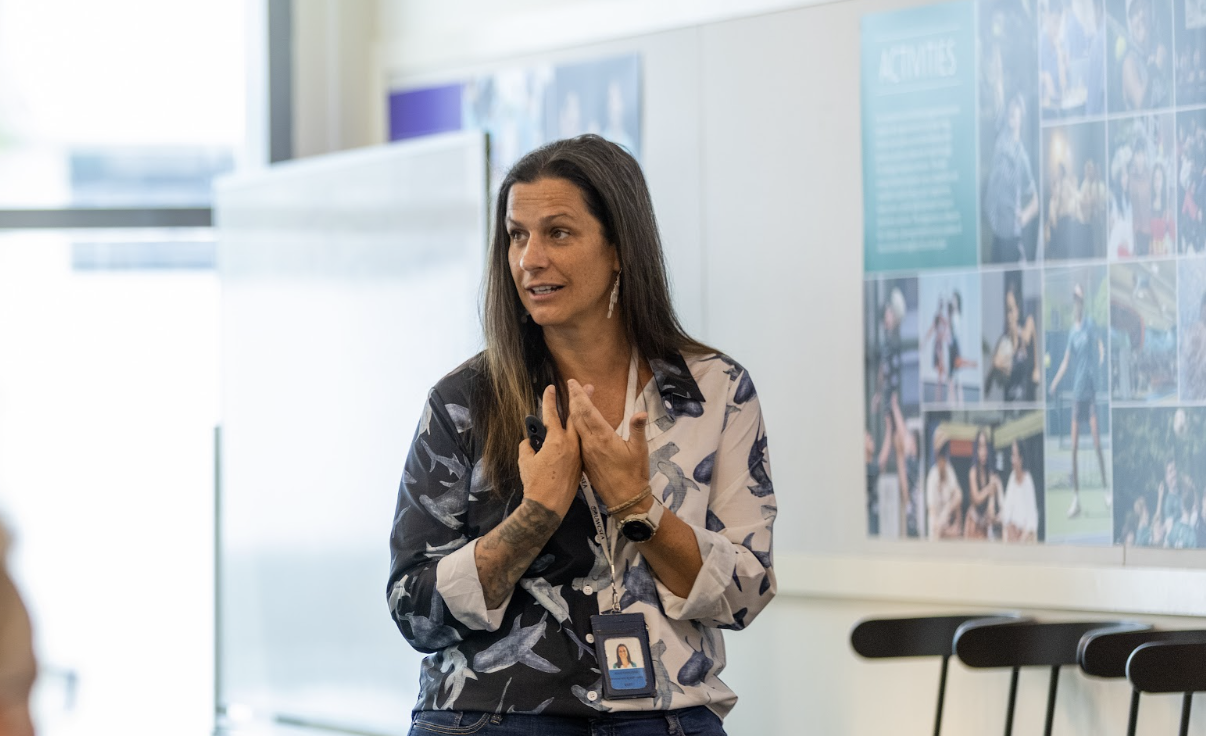
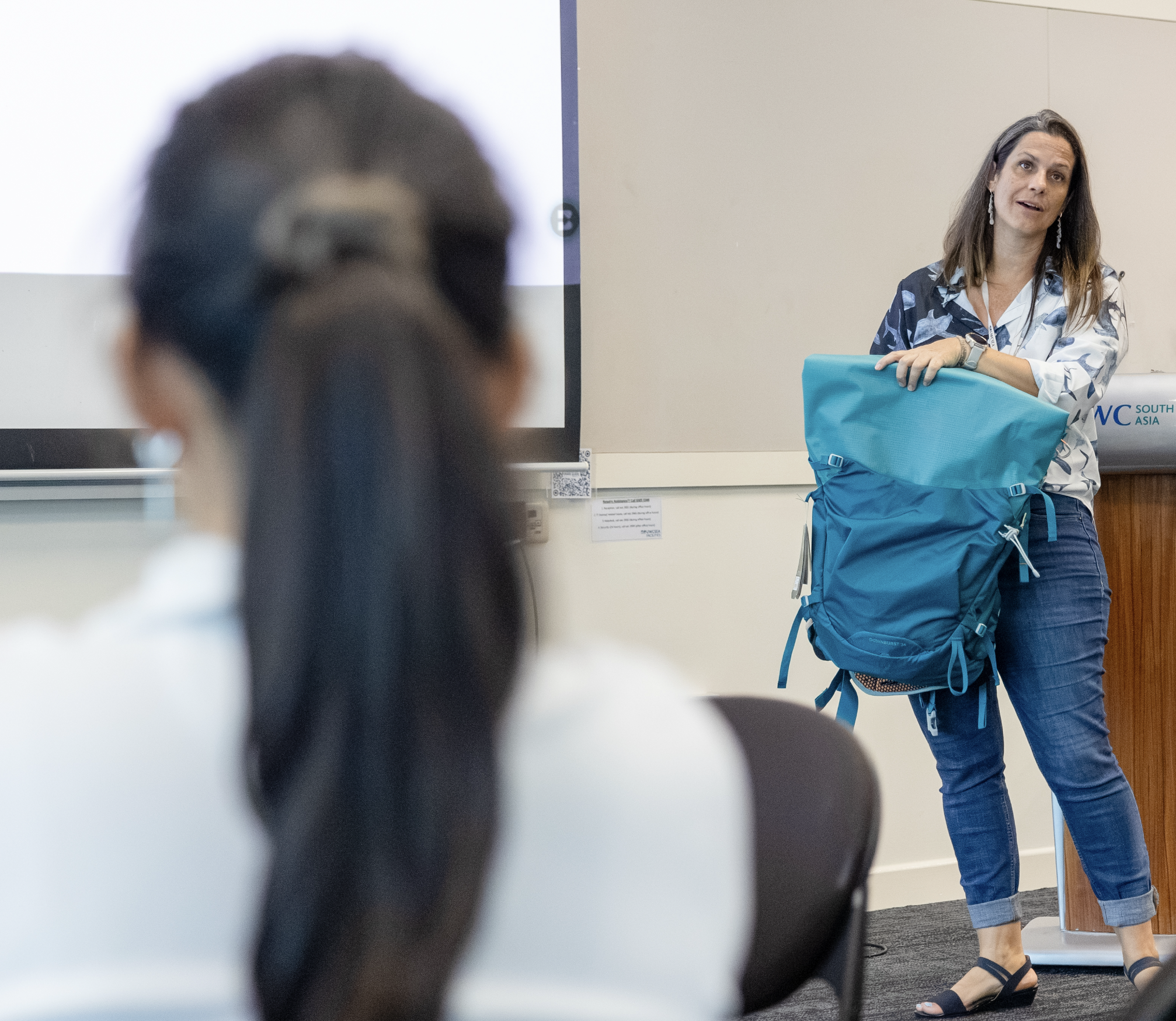
As the Head of Environmental Sustainability K–12 on East Campus, I wanted to offer more than a polished retrospective of past leadership. Instead I wanted to invite our students - and fellow leaders from across the College - directly into the tension of a real-time decision-making process, examining the fundamental friction between intention and impact.
From the Coral Reefs of Jamaica & Indonesia to the Antarctic Ocean
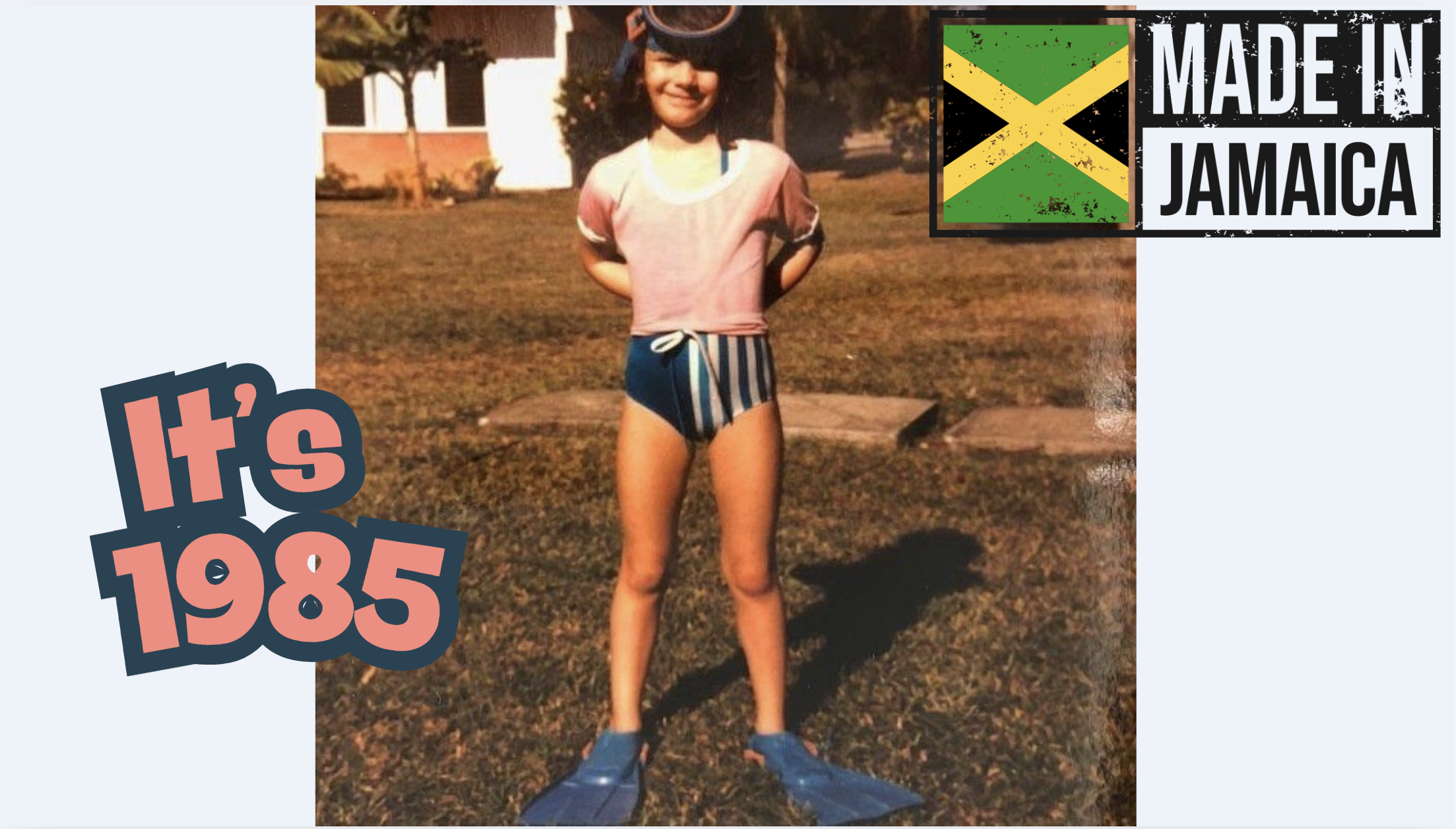
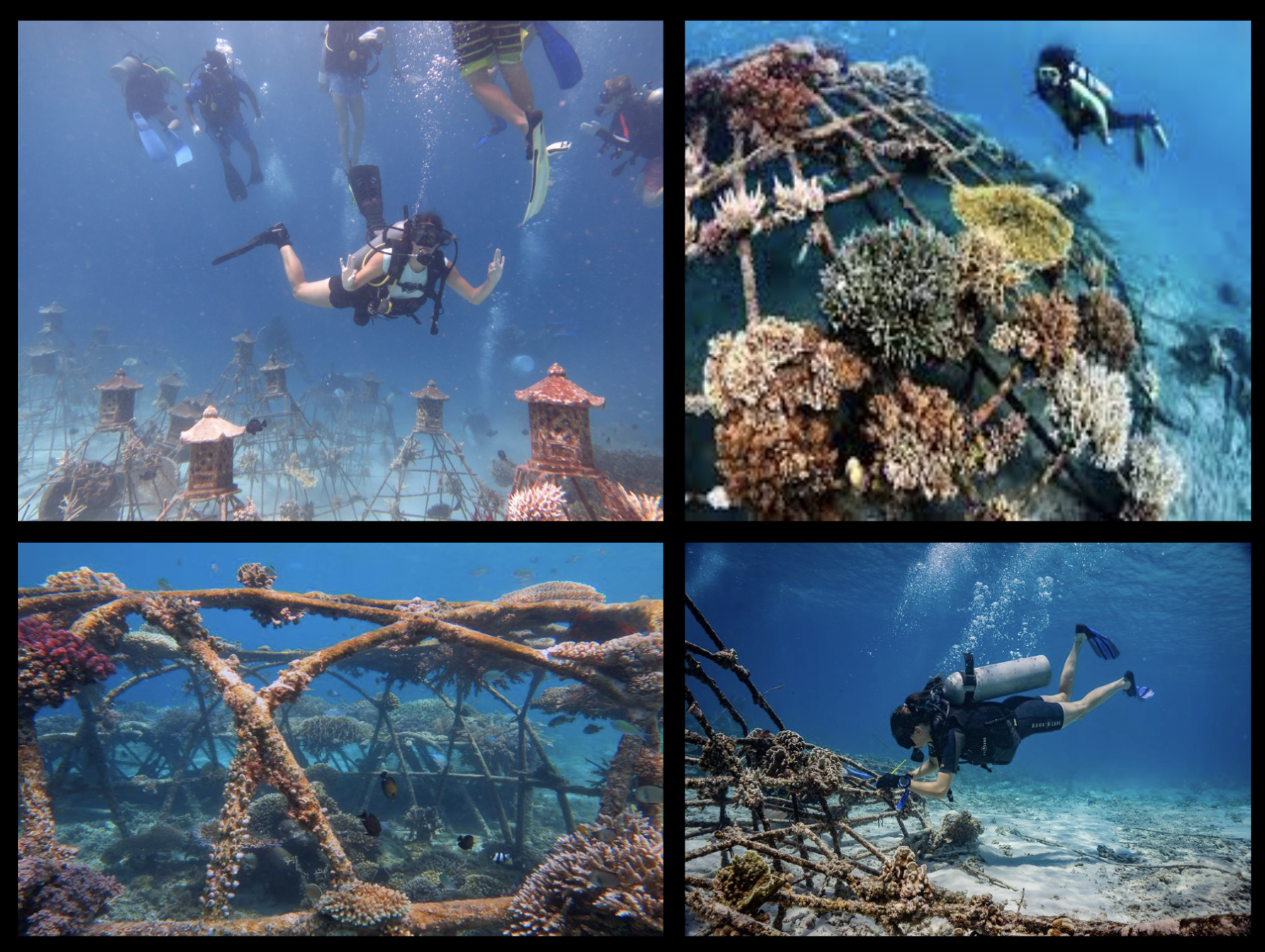
I began our session where my own story started: growing up in Jamaica, deeply connected to the rhythm and fragility of the sea. The ocean has always been my anchor. I showed a picture of a 7-yr old me in snorkelling gear and dropped the first provocation of the session. I asked the students to remember their 7 or 8 yr old selves. What were they passionate about? What was their anchor? And how did they act, maybe without even knowing it, as a change-maker back then?
Early in my teaching career, I found myself facing a crossroads. Inspired deeply by Service Learning opportunities at East Campus in 2014, I decided to step away from the traditional classroom to become a scuba instructor, spending just over a year working hands-on in coral reef restoration in Indonesia. Before returning to the classroom, I worked with a nonprofit social enterprise, the JUMP! Foundation, pursuing their vision of ‘making transformational learning accessible to all’.
Stepping off a stable career ladder was terrifying. Plenty of well-meaning people advised me against it, warning me that pausing my trajectory was too risky. Doing it anyway taught me my first real lesson in change-making: sometimes, following your conviction requires challenging expectations and trusting that your passion might build a bridge others just can’t see yet.
Fast forward to the present, and that same willingness to lean into the unknown led to accept an extraordinary invitation from world-renowned polar explorer Robert Swan. The invitation: to lead a cohort of educators, alongside corporate leaders and climate scientists, on an upcoming sustainability and leadership expedition to Antarctica with his 2041 Foundation. While this role allows me to bring crucial insights, partnerships, and educational content directly back to our college, the journey carries a significant environmental footprint - roughly 5.2 tonnes of personal carbon on long-haul flights alone! Over the past five months, preparing for this expedition has pushed me to wrestle with four core questions at the heart of institutional responsibility:
Integrity vs. Influence: Is declining an opportunity to preserve personal carbon integrity actually more values-aligned than stepping into positions of influence?
Calculating & Understanding Impact: How do we measure whether the tangible educational and systemic return justifies the immediate environmental footprint?
Ethical Governance: Who holds the legitimacy to decide when high-carbon journeys are "worth it" and by what framework do we make that judgment?
The Burden of Proof: What specific, measurable outcomes must be brought back for high-impact travel to be ethically defensible?
Turning the Classroom into a Decision Lab
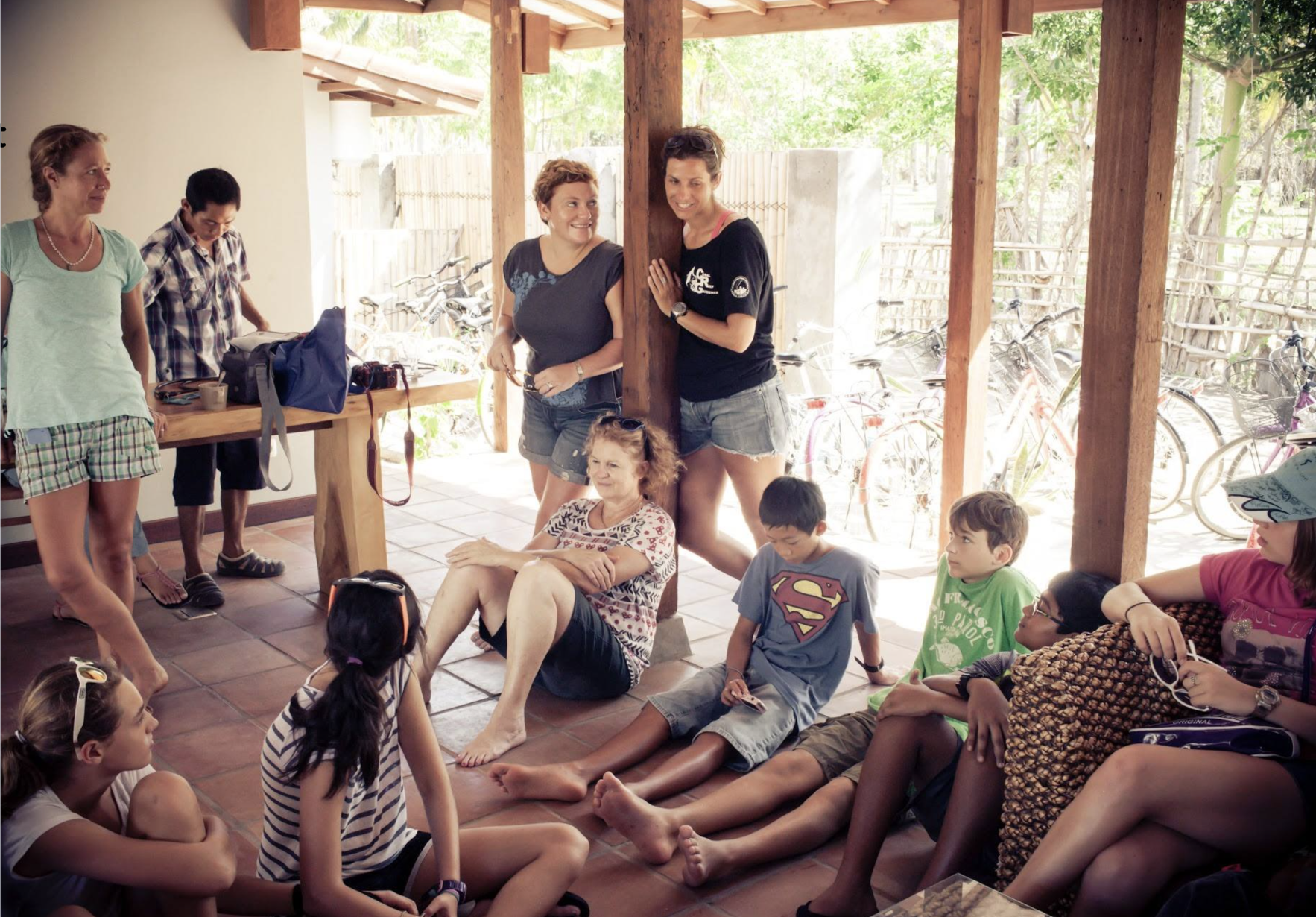
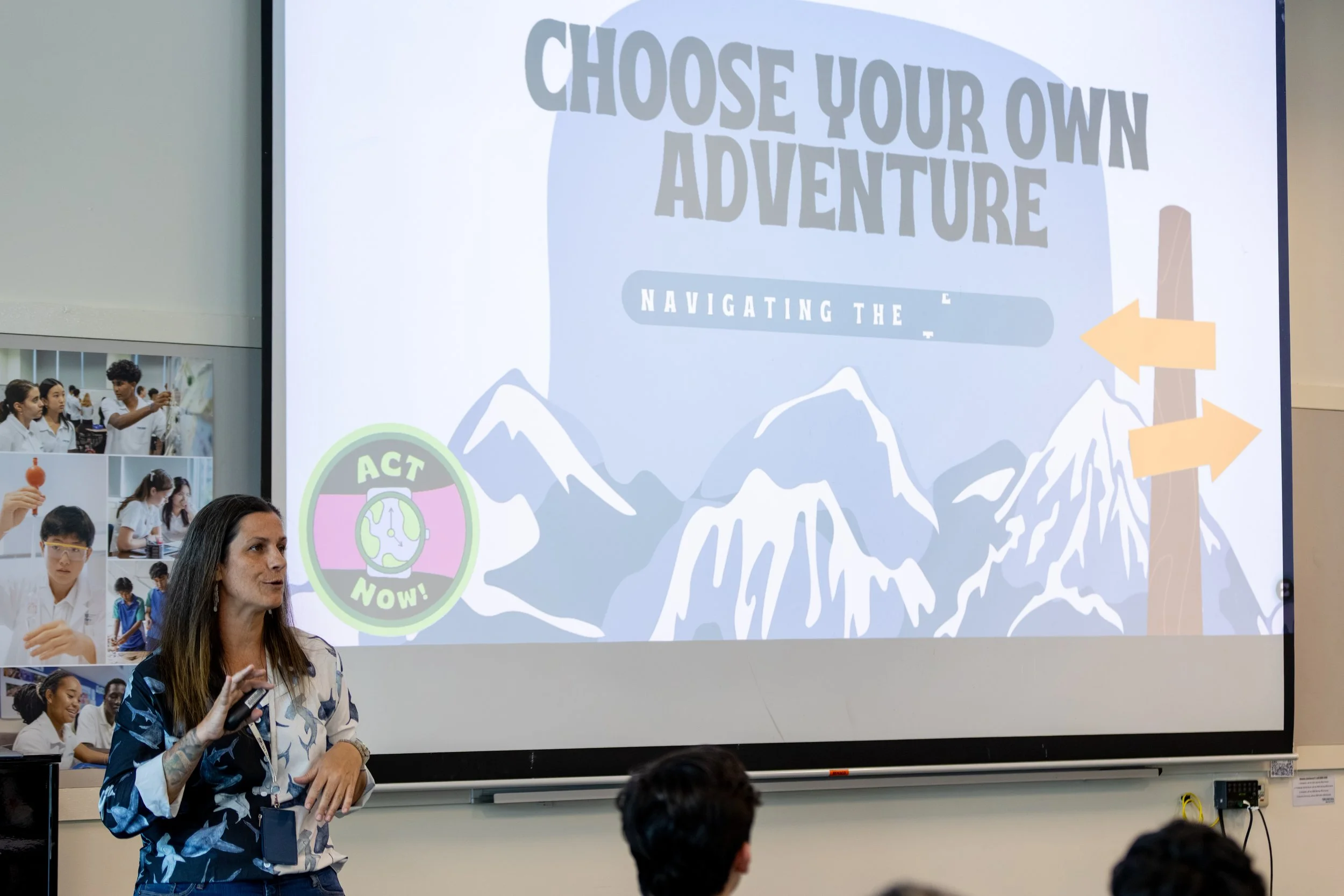
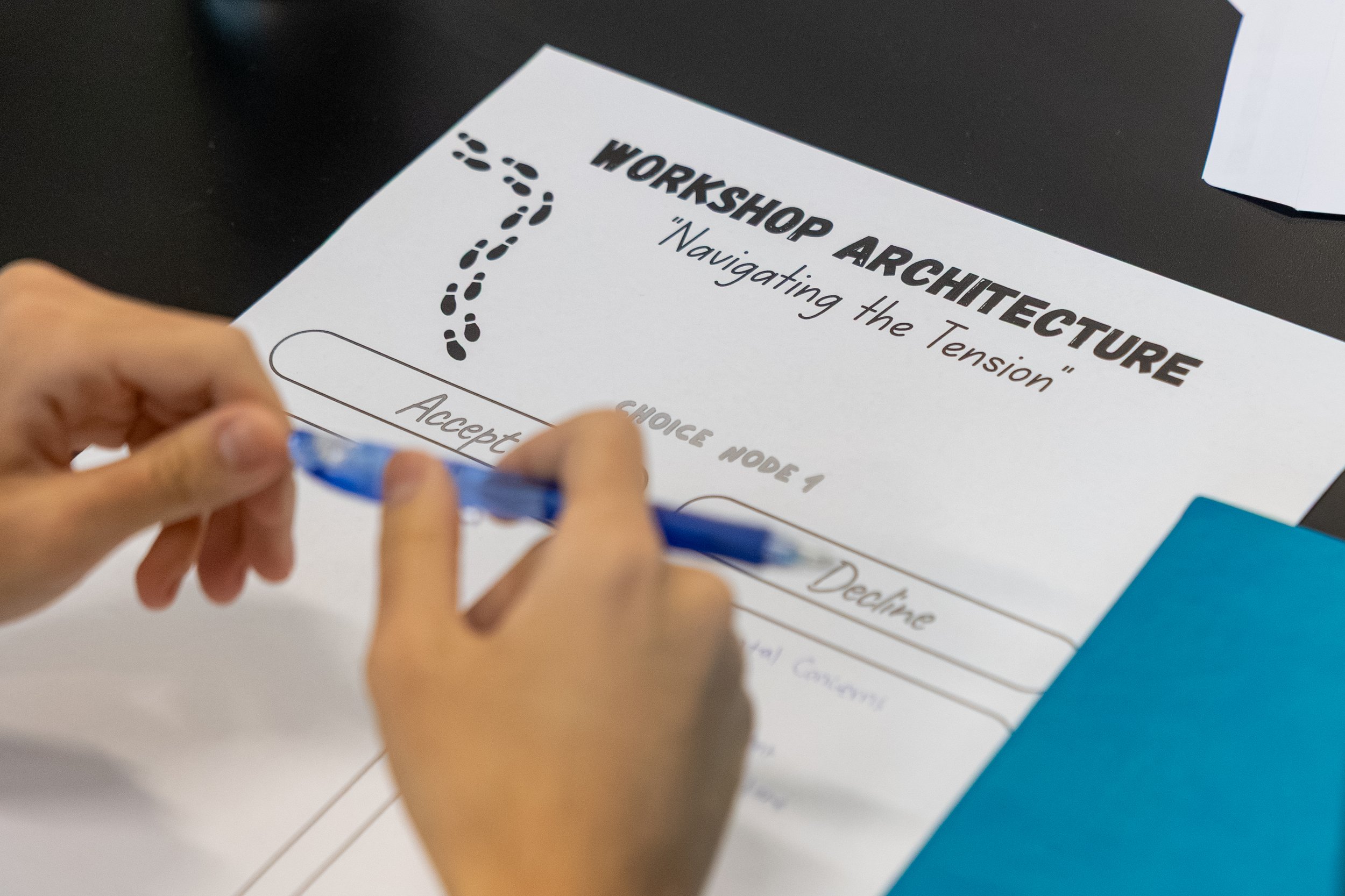
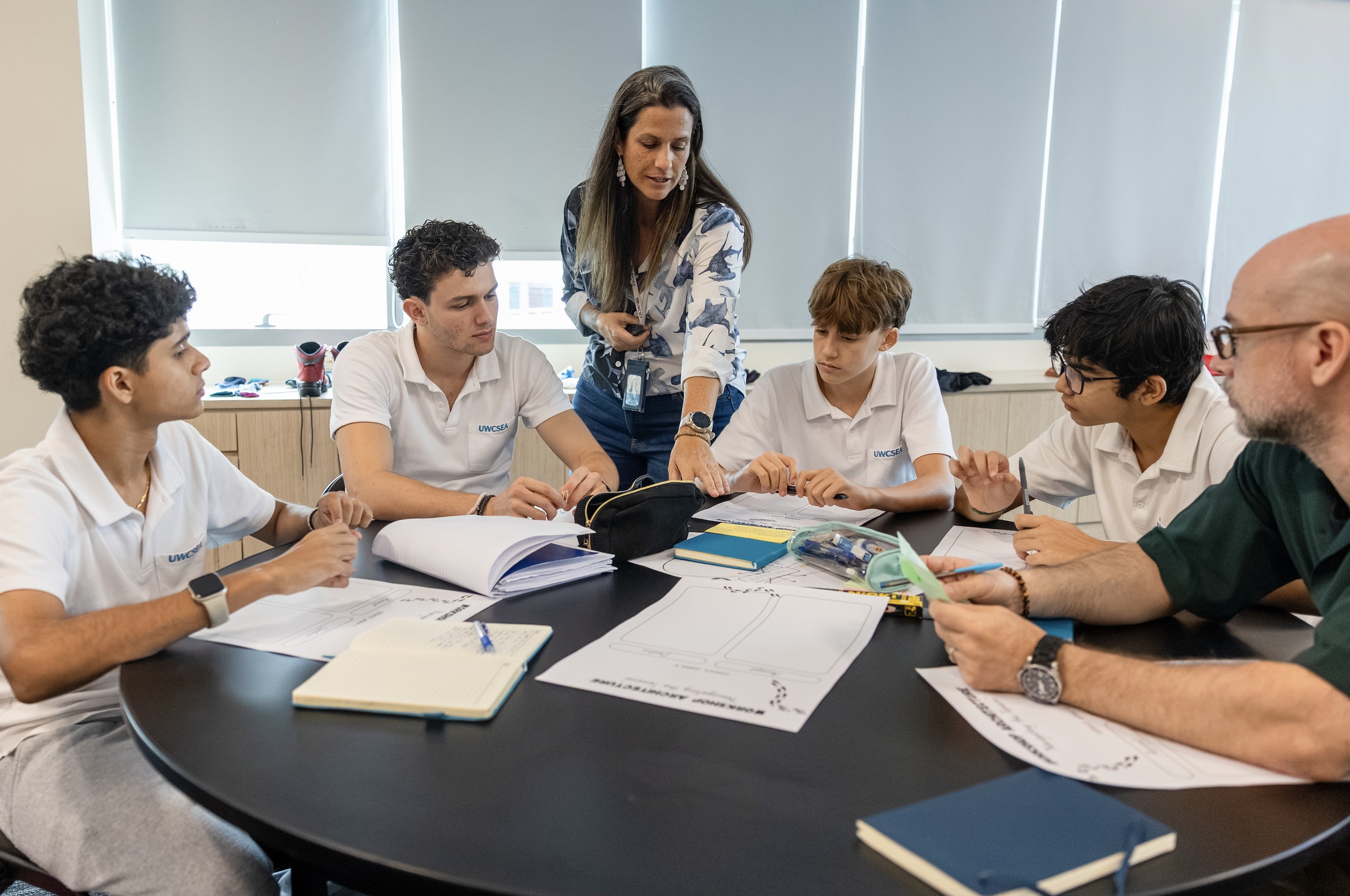
Rather than presenting my own answers, I handed the steering wheel over to the students. After the introduction, I transformed our session into a “Choose-Your-Own-Adventure” Decision Lab, titled Navigating the Tension. Equipped with tactile visible-thinking maps, charts and diagrams, and curated evidence cards. students worked in teams - joined by College leaders sitting right alongside them - to trace my thinking through a series of Choice Nodes.
Choice Node 1: Integrity vs. Influence
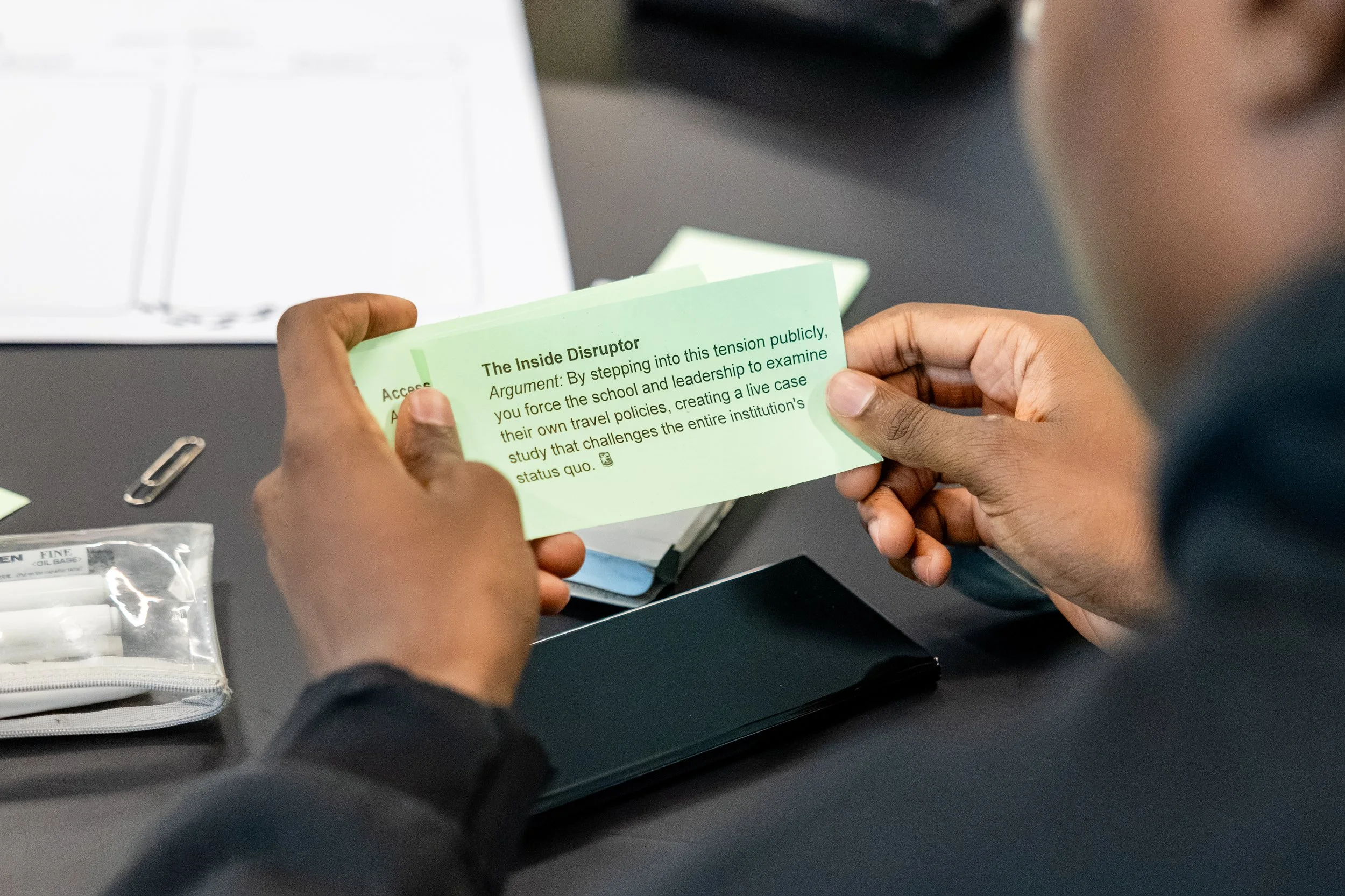
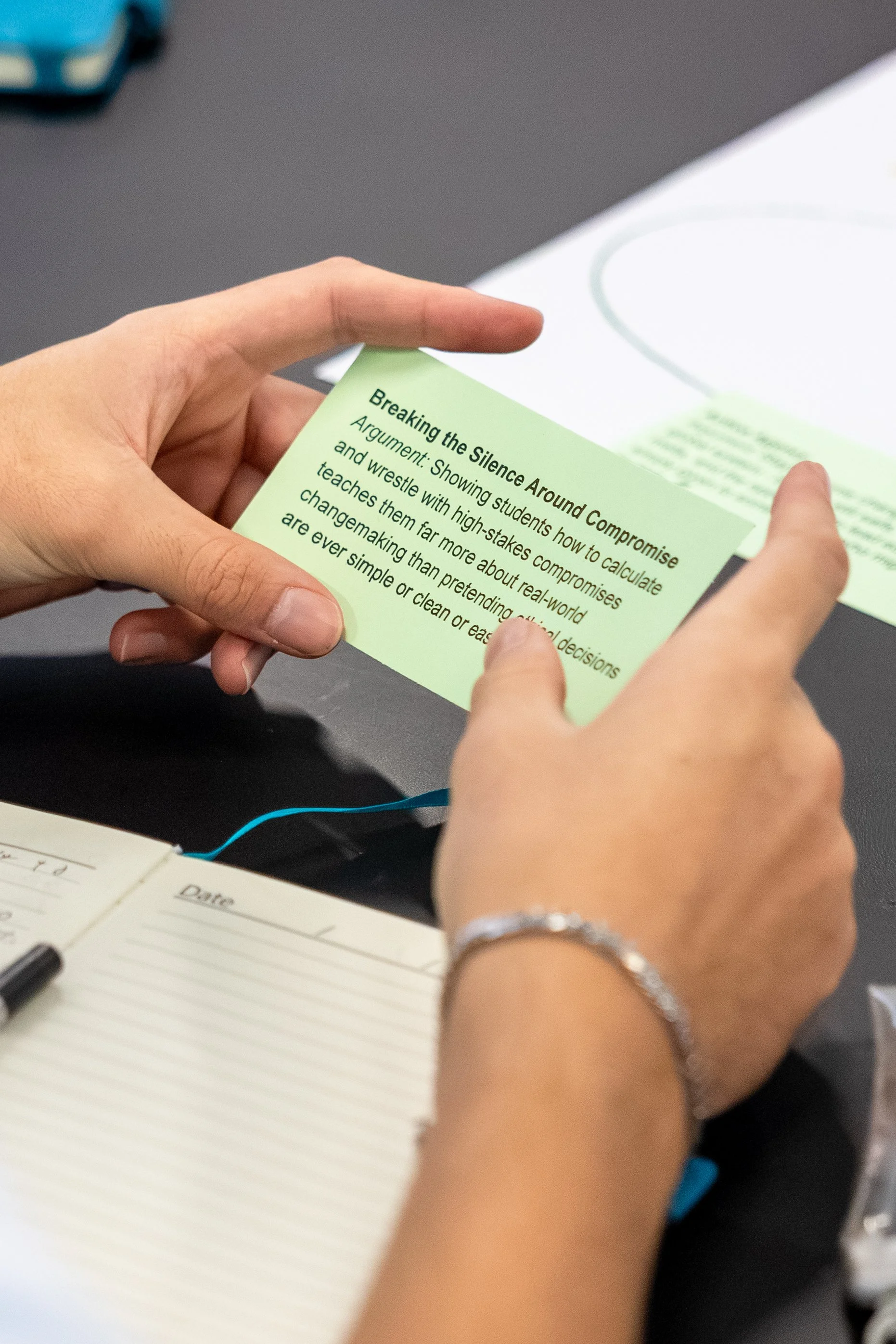
In the first stage, students had to decide whether they would accept or decline Robert Swan’s invitation. Mapping out the arguments, each table received a pack of specific argument cards weighing both sides.
The Cases for "No" (Personal Carbon Integrity): Declining preserves unimpeachable credibility, avoids normalising "impact tourism," and prevents the cynicism that arises when leaders make carbon exceptions for themselves. As one card reminded them, sometimes the most disruptive lesson a leader can teach is a "Radical No."
The Cases for "Yes" (Systemic Influence): Clean hands rarely transform dirty systems. Accepting puts an educator directly in rooms of power alongside corporate sustainability directors, polar scientists, and policy influencers - and turns my own dilemma into a transparent, live case study for over 6,000 students across our college.
Choice Node 2: Calculating Impact, Down to the Toothbrush
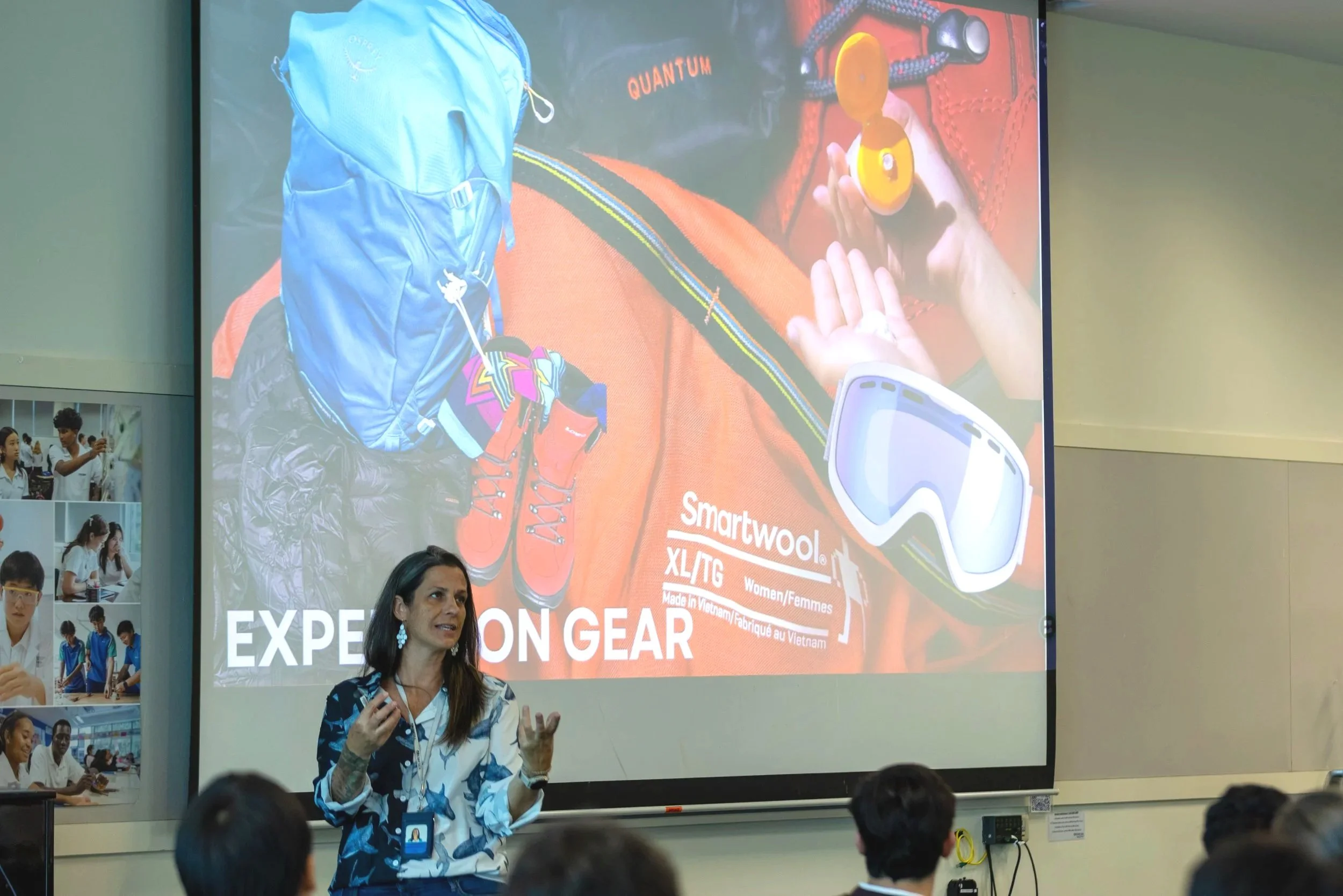
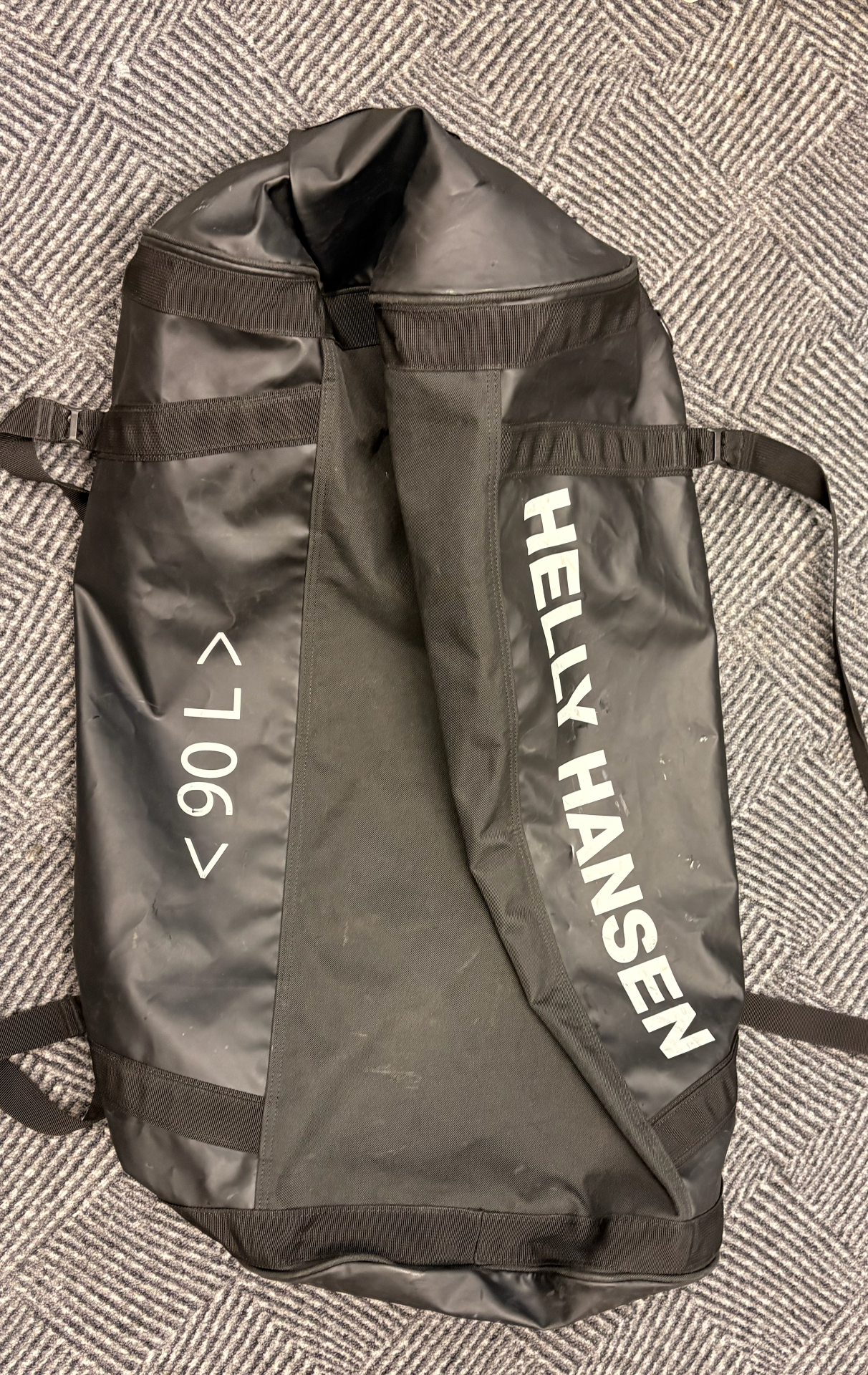
After the groups wrestled with the invitation, we zoomed in on the physical realities of the expedition itself: the transit flights, the ship’s engineering, the expedition provider’s sustainability policies, wilderness biosecurity, and physical gear required to keep me safe on this expedition. I didn’t shy away from the hard facts. Deliberately, I did a deep dive into the one area where I had the most choice: my gear acquisition. I opened up my duffle bag, right then and there, to show how circularity and intentionality can shrink an expedition’s upstream footprint. Instead of buying thousands of dollars of brand-new, petroleum-derived technical gear destined to sit in a Singapore closet, I broke down my strategy:
Borrowing first: Sourcing cold-weather essentials from friends, colleagues, and past expeditioners.
Buying intentionally: Purchasing only what was strictly necessary from certified B Corporations or platforms like The Last Hunt, which divert end-of-season technical gear from landfills.
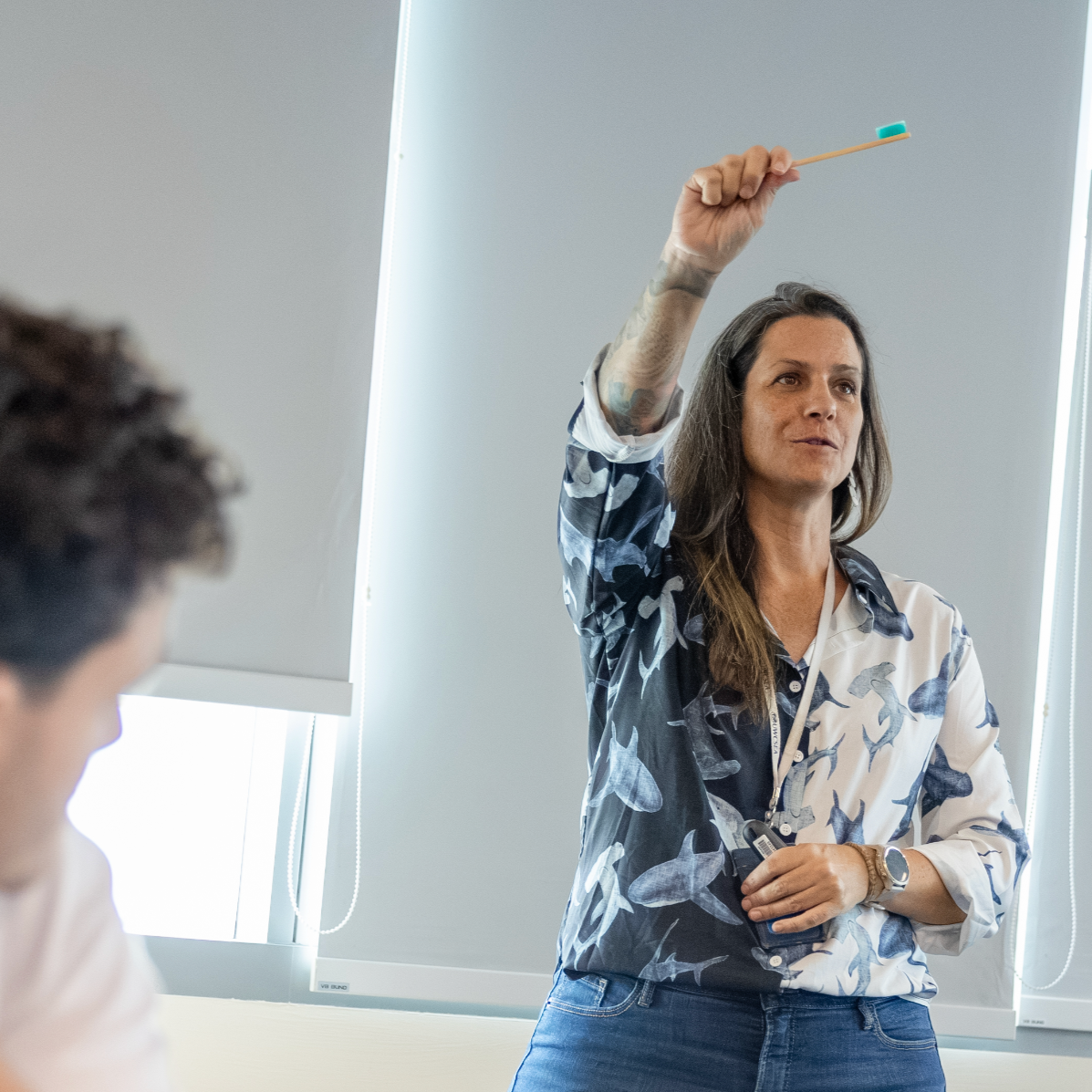
Minimizing chemical runoff and microplastic shedding: Packing reef- and ocean-safe sunscreens, all-natural soaps and deodorants, and a simple bamboo toothbrush and as much natural fibres as possible - merino wool over synthitics.

The Burden of Proof: Shifting from "Stakeholders" to "Community Partners"
If someone chooses to say "yes" to a complex opportunity like this, they carry what I called in the workshop The Burden of Proof. Going to Antarctica cannot be eco-tourism; it requires a binding contract of measurable outcomes that make the journey ethically defensible. Before asking the students to brainstorm what I needed to bring back to make the trip a net positive, we paused for a critical conversation about language. In their coursework, students frequently use the word stakeholders. I explained why I intentionally replace that term with Invested Community Partners - sharing how stakeholder originates from colonial land-grabbing practices in places like Canada, where wooden stakes were driven into the ground to claim territory from Indigenous peoples.
Language shapes our mental models. Using the lens of Invested Community Partners, the students stepped into the shoes of their peers, teachers, parents, and local Singaporean organisations. Together with the college leaders in the room, they mapped out concrete, non-negotiable deliverables I must bring back from the ice. Ranging from keynotes for events like Model United Nations, live satellite classroom links with polar researchers, to permanent reforms in how our college evaluates the carbon cost and educational return of international travel.
Looking Back, Looking Forward
As I wrapped up, I brought our conversation full circle. For me, becoming a change-maker didn’t start with an invitation to Antarctica, and it doesn’t require a plane ticket. It started with paying attention to what I loved as a kid in Jamaica, having the courage to take an unconventional path at times in my life, and showing up every day in my role here at the college to help our community navigate the messy, ongoing tensions between intention and impact.
I left our Grade 11s with two final prompts to carry forward: Remember that time in your life when you have already acted as a change-maker and look ahead to the next tension you are ready to step into.
Watching our students and college leadership debate side by side, question assumptions, and refuse easy answers gave me immense hope. Not every student agreed with my decision to join this expedition and they were confidently vocal about their reasons why. If this is the caliber of systems thinking our young people are bringing to the table, our future is in very capable hands.
All Images by Elena Bell, UWCSEA
